
CLP labels.
Ready for inspection.
We draft label content compliant with the CLP Regulation – from pictograms to H and P statements, in the language of every market.
CLP labelling
Requirements fully under control.
Content that meets the regulations
Language versions for EU markets
Verification before printing
Legal basis
CLP label –
what is it and when is it required?
A CLP label tells users about the hazards a product presents and how to use it safely. It is required by the CLP Regulation (EC) No 1272/2008 for hazardous substances and mixtures. Its content follows from the classification and composition, must be consistent with the safety data sheet and written in the language of the country of sale.
Your industry
Who needs
a CLP label?
Household chemicals
and detergents
Cleaning products, laundry liquids and powders – often with additional requirements for detergents.
Building and
automotive chemicals
Paints, adhesives, sealants, screenwash and workshop products.
Candles, fragrances
and crafts
Candles, waxes and fragrance oils – products where the labelling obligation often comes as a surprise.
Scope of work
From product data
to finished label content.
01 / ANALYSIS
Classification and data
We review the composition or safety data sheet and the product’s classification.
02 / CONTENT
Label elements
We select the label elements, including pictograms, the signal word and H and P statements.
03 / TRANSLATIONS
Language versions
We prepare the content in the languages of the markets where you sell your products.
04 / GUIDELINES
Technical guidelines
We specify the size of label elements, prepare guidelines and explain the requirements.
Timeline
Four steps.
One consistent label.
Discuss product and packaging
Composition, safety data sheet, pack size, markets of sale.
Agree on scope and price
Number of products, language versions and packaging variants.
We prepare the label content
Label elements and guidelines – we explain the requirements.
Approve and send to print
You get a content file ready for your designer – we verify the artwork.
Estimated turnaround
1–3
working days
From a complete data set
to label content.
For multiple language versions or packaging variants, we agree the timing individually.
Pictograms
9 CLP pictograms
and what they mean.
A hazard pictogram is a black symbol on a white background within a red diamond-shaped border. Which ones go on your label follows directly from the product’s CLP classification.
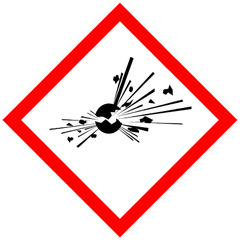
GHS01
“Exploding bomb”
Explosives, self-reactive substances and certain organic peroxides.
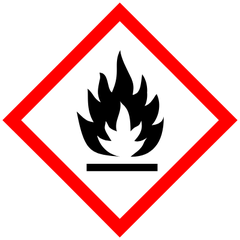
GHS02
“Flame”
Flammable substances: gases, aerosols, liquids and solids.
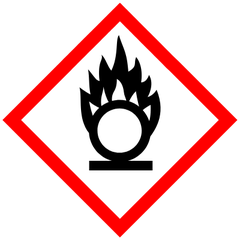
GHS03
“Flame over circle”
Oxidising substances that may cause or intensify a fire.
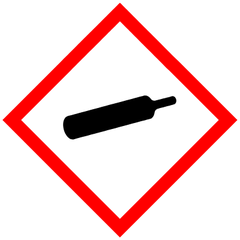
GHS04
“Gas cylinder”
Gases under pressure: compressed, liquefied and dissolved.
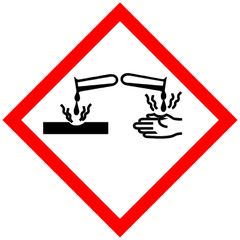
GHS05
“Corrosion”
Corrosive to skin and eyes, and corrosive to metals.
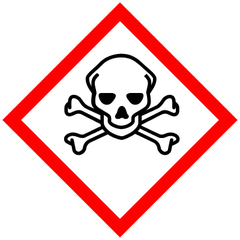
GHS06
“Skull and crossbones”
Acute toxicity – even small amounts can be life-threatening.
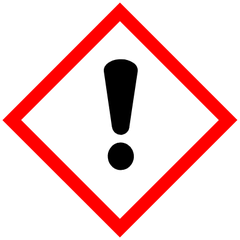
GHS07
“Exclamation mark”
Irritant, harmful, skin-sensitising or narcotic effects.
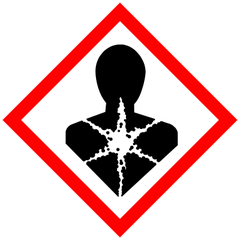
GHS08
“Health hazard”
E.g. carcinogenic, mutagenic or respiratory-sensitising effects.
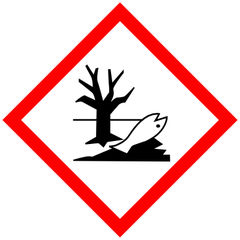
GHS09
“Environment”
Hazardous to aquatic life and the environment.
Pricing
How much does
a compliant CLP label cost?
One product for one country? Several products and languages, or a larger project? Let’s tailor the scope to your needs.
CLP label verification
From €50
net / product
Artwork verification based on your product’s safety data sheet.
CLP classification and label
From €100
net / product
CLP classification and label content prepared from the product’s composition.
Larger scope
Custom quote
pricing tailored to your project
More products, multiple languages or ongoing cooperation.
Price and scope are agreed individually.
Meet us
Our expert in chemical documentation
Paweł Jędrzejczyk
Product and chemical documentation specialist
A graduate of the Faculty of Chemistry at the University of Łódź, with postgraduate studies in the safe use and management of chemical substances.
For more than 10 years he has been helping companies place chemical products on the market. He specialises in REACH, CLP and GHS implementation worldwide, combining regulatory knowledge with experience in national and international projects.
He helps identify a product’s regulatory needs and put its documentation in order — including when entering markets outside the European Union.

See an example
What do CLP label guidelines look like?
See an example of how we present the information required on labels. Check whether your label contains similar information.
PDF in Polish · illustrative material.
It is not an actual CLP label and does not refer to an existing product.
Sample CLP labelling set
FAQ
Any questions?
Start here.
What are the basic rules of CLP labelling?
The label content follows from the product’s classification and must be consistent with the safety data sheet. The label is firmly affixed to the packaging, legible and in the language of the country of sale, and the pictograms have a red border and a minimum size.
What are the CLP label requirements for chemical products?
The label includes, among other things, the product identifier, supplier details, pictograms, the signal word and H and P statements, plus the nominal quantity for products sold to consumers. If the product has a Poison Centre Notification, the UFI code is added.
Do all chemical products need a CLP label?
No. The obligation applies to products classified as hazardous. Some unclassified products also need labelling, e.g. EUH statements for mixtures containing sensitising substances.
What does the 2024 CLP amendment change?
Amending Regulation (EU) 2024/2865 introduces, among other things, a minimum font size and spacing on labels, as well as rules for fold-out and digital labels. Following a 2025 amendment, the format requirements are due to apply from 1 January 2028.
What language must the label be in?
The official language of the country where the product is sold. H and P statements are translated using the wording in the legislation, not literally – which is why we prepare language versions based on the regulations in force.
CLP label template – can I use one?
A template shows the layout, but the content always follows from the classification of the specific product. Send us the safety data sheet and we’ll prepare the label elements for your product.
Do you design and print labels?
No. We prepare CLP-compliant label content and guidelines. The graphic design and printing are done by your designer or printer based on our file.
Contact
Your product.
Our support.
Tell us what you need. We will help define the scope and prepare a quote.
Call
+48 786 348 531
Email
info@sds-create.pl
Not sure where to start? Describe your situation and we will agree on the next step together.